
How Boltless Racking Simplifies Flexible Storage Planning
Introduction
Storage requirements can change considerably between households, workshops, offices, retail spaces and warehouses. A fixed storage arrangement may work well initially, but changing product sizes, increasing inventory and different organisational needs can eventually make the original layout inefficient. This is why flexibility has become an important consideration when selecting storage equipment.
Boltless systems offer an alternative to more permanent shelving arrangements. By using a design that does not depend on conventional nuts and bolts for every shelf connection, these systems can be assembled and configured with greater convenience. Depending on the specific design, shelf levels can also be adjusted to accommodate different storage requirements.
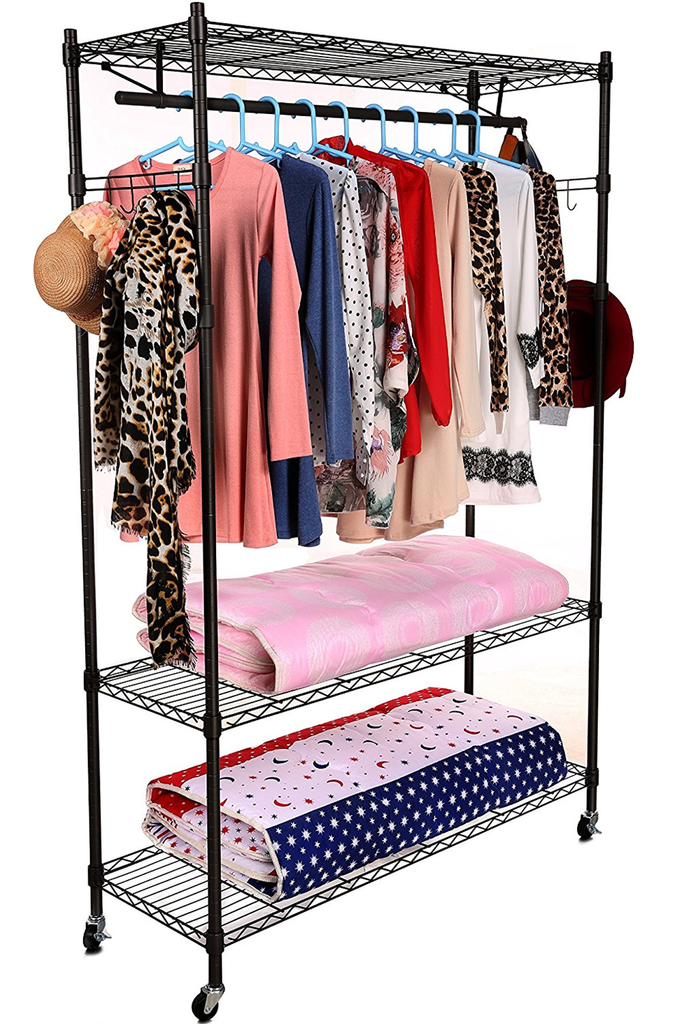
The practical value of boltless racking is not simply the absence of traditional fasteners. Its appeal comes from the combination of modular construction, adjustable storage levels and the ability to configure shelving around the available space. Jin Yu Trading’s product range includes black and chrome heavy-duty wire shelf boltless racks, with adjustable tier heights and multiple dimensions for residential and commercial storage applications.
Understanding how these systems work and where they are most useful can help buyers make more informed storage decisions.
Understanding the Boltless Storage Concept
Traditional shelving can involve numerous fasteners and fixed connections, which may make changes to the configuration more time-consuming. Boltless systems approach assembly differently by using specially designed connections between the shelving components.
The main benefit is convenience during assembly and reconfiguration. Rather than treating the shelf positions as permanently fixed, users can often adjust the levels according to the dimensions of the items being stored.
This flexibility can be particularly useful when a storage area contains mixed inventory. Small containers may require relatively little vertical clearance, while larger boxes or equipment need more space. A configurable system allows the available height to be divided according to these requirements.
Boltless construction should not, however, be interpreted as meaning that the shelving lacks structural support. The posts, shelves and connecting components still need to work together as a complete system. The manufacturer’s specifications should determine how the unit is assembled, loaded and configured.
The intended environment also matters. A household storeroom may prioritise convenience and space efficiency, while a workshop or commercial stockroom may place greater emphasis on load capacity and frequent access.
Boltless systems can therefore be viewed as a modular approach to storage rather than simply a different assembly method. Their usefulness comes from the ability to create an organised shelving structure while retaining some flexibility for future changes.
For buyers, the important question is not whether a rack is boltless in isolation, but whether its dimensions, capacity and configuration are appropriate for the intended application.
Adjusting Shelf Levels Around Different Items
One of the most useful features of an adjustable shelving system is the ability to position shelves according to the dimensions of the stored goods. This can make better use of vertical space than a fixed arrangement with predetermined gaps.
Consider a storeroom containing small household containers alongside large luggage. If every shelf has identical spacing, there may be substantial unused height above the smaller items. Adjusting the shelf positions can reduce these gaps while still leaving enough clearance for larger belongings elsewhere in the unit.
The same principle applies in commercial environments. Retail stockrooms may contain products in different packaging sizes, while workshops can hold everything from small components to large tools.
Adjustability also makes it easier to respond to changes. A business may replace one product line with another, or a household may acquire new equipment. Instead of replacing the entire shelving unit, users may be able to change the shelf configuration to accommodate the new items.
The arrangement should still be planned logically. Frequently accessed products can be positioned at convenient heights, while seasonal or rarely used belongings can occupy higher levels.
Weight should also influence shelf placement. Heavier items may be more practical on lower shelves, depending on the shelving specifications and intended loading conditions. Lighter items can occupy higher positions where appropriate.
Jin Yu Trading’s heavy-duty wire shelving systems list adjustable tier heights and are available in multiple overall heights and dimensions, providing flexibility for different storage layouts.
The advantage of adjustability is therefore not simply having more choices. It is the ability to make the available vertical space correspond more closely with the actual contents of the storage area.
Making Better Use of Compact Storage Areas
Compact rooms require careful consideration because floor space is often the limiting factor. Adding more storage furniture can quickly reduce the area available for movement and access.
Vertical shelving provides a way to increase capacity without substantially increasing the footprint of the storage system. Several shelf levels can occupy the same floor area, allowing more categories of belongings to be stored within a compact room.
This can be particularly useful in HDB storerooms, bomb shelters, offices and smaller commercial storage areas. Jin Yu Trading specifically lists its heavy-duty wire shelving as suitable for applications including HDB BTO homes, bomb shelters, storerooms, offices and factories.
However, compact storage should not be approached by filling every available centimetre. A shelving unit needs sufficient clearance around it for users to enter, retrieve belongings and move larger items.
Shelf depth is particularly important. Deep shelving may provide greater theoretical capacity, but items stored at the back can become difficult to access. A shallower configuration may be more practical for smaller belongings that are frequently retrieved.
Height also needs to be considered. Taller shelving can increase capacity, but upper shelves should be reserved for items that can be accessed safely and conveniently.
A good compact-storage arrangement therefore balances capacity with accessibility. The objective is to store more belongings while keeping the room functional.
Boltless systems can support this approach because their adjustable shelf levels allow users to tailor the internal arrangement rather than relying entirely on fixed spacing.
Matching Load Capacity With Storage Requirements
Flexibility does not eliminate the need to consider load capacity. Any shelving system should be selected according to the weight of the goods it is expected to support.
The first step is identifying the heaviest items and estimating the combined weight that may occupy each shelf. Users should then compare those requirements with the manufacturer’s stated load rating.
Jin Yu Trading’s heavy-duty black and chrome wire shelving pages specify load capacities of 200 to 350kg per tier under uniformly distributed loading conditions, depending on the system.
The phrase “uniformly distributed load” is important. A shelf’s rated capacity should not automatically be interpreted as permission to place the entire load in one concentrated area. Stored goods should be arranged according to the manufacturer’s guidance.
The complete rack configuration also matters. Shelf panels, vertical posts and connecting components work together, so capacity should be considered at the system level rather than by looking at one individual component.
Heavy items are often more practical on lower levels because they can be easier to handle. This can also leave higher shelves available for lighter belongings.
Storage requirements may change over time. If a business introduces heavier products or a household begins storing additional equipment, the existing loading arrangement should be reviewed rather than assuming that the original configuration remains suitable.
Selecting an appropriate capacity provides a stronger foundation for long-term storage. The goal is not necessarily to choose the highest available rating, but to select a system that comfortably corresponds to the actual demands of the application.
Organising Inventory for Faster Access
A flexible rack becomes much more useful when its shelves are organised according to how the stored goods are used. Simply adjusting shelf levels does not automatically create an efficient storage system.
Frequency of access is a useful starting point. Items needed every day should generally be positioned within convenient reach, while seasonal belongings and rarely used equipment can occupy less accessible areas.
Products should also be grouped into clear categories. A workshop might separate hand tools, electrical equipment and spare parts. A household storeroom could have dedicated sections for cleaning products, luggage, household supplies and seasonal decorations.
Labelling can make these categories easier to maintain. When every shelf or container has a defined purpose, users are less likely to return items to random locations.
Open wire shelving can support visibility because the stored goods remain relatively easy to see. This can be useful when users need to identify a particular box or container without moving everything stored around it.
Small items can be organised using compatible containers or accessories. Jin Yu Trading offers shelf liners, ledges, hooks, casters, levellers, clips and other accessories for its wire shelving systems, providing additional ways to adapt storage to different requirements.
The objective is to create a system where users can quickly understand where an item belongs. This reduces searching and makes it easier to maintain the organisation after the initial installation.
Planning for Future Changes
Storage systems should be considered as long-term infrastructure rather than temporary arrangements. Household and business requirements can change, and a rigid shelving layout may become inefficient as those changes occur.
A modular boltless configuration can provide useful flexibility because shelf levels can be repositioned according to new storage requirements. A shelf that originally held small containers could later be adjusted to accommodate larger boxes, provided the dimensions and load requirements remain suitable.
Businesses can benefit from this adaptability when product ranges change. New packaging sizes may require different shelf spacing, while fluctuations in inventory can make certain areas more or less important.
Households may experience similar changes. Equipment, luggage, children’s belongings and seasonal items can all change over time. An adjustable system can be reorganised without necessarily replacing the entire unit.
Periodic reviews are therefore useful. Users can identify shelves that are consistently overcrowded, categories that no longer require as much space and belongings that are no longer needed.
Decluttering should form part of this process. Removing unused items can recover storage capacity without requiring additional shelving.
Future expansion should also be considered carefully. Adding more units may increase capacity, but it should not compromise access routes or turn a compact storage area into an overcrowded one.
The most useful storage system is one that can adapt without becoming difficult to manage. Flexibility should support practical organisation rather than encourage constant rearrangement.
Conclusion
Boltless shelving provides a practical approach to storage for environments where flexibility, accessibility and efficient use of space are important. Its modular construction and adjustable shelf levels can make it easier to organise items with different dimensions while adapting the configuration when requirements change.
The selection process should still begin with the fundamentals: accurate measurements, appropriate shelf dimensions, expected load, frequency of access and the physical characteristics of the stored goods.
For compact spaces, vertical storage can increase useful capacity without requiring a larger floor footprint. For workshops, stockrooms and commercial environments, adjustable levels can help accommodate changing inventory and different product sizes.
Load capacity remains equally important. Users should follow the manufacturer’s specifications and ensure that stored goods are distributed appropriately across the shelving system.
With the right planning, a boltless storage system can provide a balance between capacity and flexibility, allowing the same basic structure to remain useful as storage requirements evolve. Jin Yu Trading offers black and chrome heavy-duty wire shelf boltless racks in multiple dimensions and tier configurations, alongside accessories that can further adapt the system to different applications.
